This site has limited support for your browser. We recommend switching to Edge, Chrome, Safari, or Firefox.
~ join our mailing list for a first look at all things French & Fabulous ~ read the latest blog post

Your Basket
0

No more products available for purchase

Products
Pair with
Subtotal Free

The French Guild System: Ébénistes, Menuisiers, and the Golden Age of French Craftsmanship 

Long before modern design houses and luxury ateliers, some of the finest furniture ever made was created in Paris under a strict and highly organized guild system. During the 18th century, no single craftsman produced a masterpiece alone. Chairs, commodes, tables, clocks, and cabinets were the collaborative work of carpenters, carvers, cabinetmakers, gilders, and upholsterers — each belonging to a powerful Parisian trade guild that governed every stage of creation.


Unlike most furniture made today, where a single workshop may complete an entire piece, 18th century French furniture was the result of layered expertise. A menuisier (carpenter or joiner) shaped and assembled the structural framework and would ultimately stamp his name on the finished piece. The ébéniste, master of veneered case furniture, transformed exotic woods into surfaces of extraordinary refinement. Ornate carving was executed by a sculpteur (sculptor), while gilt-bronze mounts were cast and chased by members of the guild of fondeurs-ciseleurs (smelters). Finally, the tapissier (uphosterer) applied opulent textiles. Each specialist trained for years within his own discipline before earning the right to work independently. This system of regulated craftsmanship produced some of the most refined furniture in European history — a Golden Age defined not only by style, but by standards.

Two masters of the workshop: the menusier and the ébéniste.


Masters of the Workshop

The tools of the trade — mastery began with the discipline of the workshop.


The guild system did far more than organize labor — it protected reputation. In 18th century Paris, furniture making was tightly regulated. Craftsmen were not free to carve, veneer, gild, or upholster at will. Each trade was clearly defined, and crossing into another discipline without authorization could result in fines, confiscation, or worse.


The Corporation des Menuisiers, established in medieval Paris and later expanded to include ébénistes, oversaw training, standards, and production. Workshops were inspected regularly. Fees were required at every stage of advancement. Even the number of masters permitted to practice at any given time was strictly controlled. Excellence was not optional — it was enforced.


This structure may seem restrictive today, but it is precisely what produced the extraordinary refinement of 18th century French furniture. Every carving, every mount, every joint reflected not just skill, but accountability.


An 18th century joiner’s workbench from Denis Diderot’s Encyclopédie — the essential workspace where craftsmen shaped, planed, and assembled furniture by hand. 


From Apprentice to Maître


An eighteenth-century woodworking workshop illustrated in Denis Diderot’s Encyclopédie (1769), where apprentices trained under master craftsmen.


Becoming a maître or master craftsman in 18th century France was not simply a matter of talent — it was a matter of endurance. In order to be accepted into the Corporation des Menuisiers, enthusiastic young boys between the ages of twelve and fourteen had to undergo a very rigorous training process. Required to spend at least three years in the workshop of a master furniture maker, these young apprentices swept floors, prepared materials, and learned the fundamentals of joinery and carving before ever being entrusted with serious work. 


Those who trained in Paris spent another three years as a compagnon or journeyman refining their skills under various masters. In the provinces, the process included six additional years. By the time a journeyman was eligible to pursue mastery, he was often in his early twenties.


To earn the coveted title of maître, each journeyman was required to produce a chef-d’œuvre — a masterpiece demonstrating technical precision, structural integrity, and artistic refinement. Only after approval — and the payment of substantial guild fees — could he open his own atelier. The number of masters allowed to operate at any given time was strictly limited. Newly minted maîtres were highly trained — and often deeply in debt.


A chef-d’œuvre — the masterpiece required for admission into the guild as a master craftsman.


It is important to note that these guilds did not function like today's American trade unions. Their purpose was not collective bargaining but the preservation of artistic and technical standards. Craftsmen frequently borrowed heavily simply to pay their guild fees. Excellence was not optional; it was enforced — and often costly.


Divided by Trade, United by Craft

The Corporation des Menuisiers was divided into distinct trades. One branch produced boiserie — sculpted wall paneling for grand interiors — while the other focused on furniture. Within furniture making, responsibilities were further distinguished. Menuisiers worked primarily in solid wood, crafting carved chairs, beds, and console tables. Ébénistes or cabinetmakers, masters of veneered case pieces, specialized in cabinets, desks, and commodes adorned with exotic woods and intricate marquetry.


Though united under one guild structure, the two trades operated in different worlds within Paris. Menuisiers were typically French-born craftsmen working in or near the rue de Cléry. Ébénistes, often from Germany and Flanders, established their ateliers in the Faubourg Saint-Antoine, a woodworking district active since the 15th century. Their foreign origins intensified a rivalry between the trades that fueled both tension and innovation.


Beyond Paris, equally skilled craftsmen worked throughout the provinces. In regions such as the Loire Valley and cities like Lyon, furniture was scaled for less ostentatious interiors, yet the workmanship remained exceptional. Provincial ateliers furnished everything from country châteaux to hunting lodges, offering a vital counterpoint to Parisian luxury. Whether produced in the capital or countryside, these meubles reflected the same disciplined system of specialization and pride in craft.


The Stamp of Approval

By the mid-18th century, regulation grew even more formalized. In 1743, menuisiers and ébénistes were united under the Corporation des Menuisiers-Ébénistes, strengthening oversight. From that point forward, any piece of furniture offered for sale in Paris was required to bear the maker’s stamp — a mark of accountability as much as authorship.


Approved pieces also received the additional stamp JME (jurande des menuisiers-ébénistes) after inspection by elected guild officials. Workshops were examined multiple times a year, and substandard furniture could be confiscated.


This rigorous system ensured consistency, protected reputations, and elevated French furniture to an international standard of excellence. For modern collectors, those stamps remain invaluable — tangible evidence of origin, training, and uncompromising discipline.


Stamped signatures of 18th-century French furniture makers — the marks that identified the master craftsman behind each piece.


The Golden Age of French Craftsmanship

The result of this system was extraordinary. France became the undisputed leader in fine furniture production during the 18th century. Under the reigns of Louis XIII, Louis XIV, Louis XV, and Louis XVI, furniture evolved in scale, ornament, and refinement — yet always retained structural integrity enforced by the guilds.


What made this period exceptional was not only artistic vision, but collaboration. A chair passed through the hands of a menuisier, a sculpteur, a gilder, and a tapissier before completion. A commode required the architectural precision of an ébéniste and the brilliance of a fondeur-ciseleur before ever leaving the atelier. Each piece embodied layered expertise — craftsmanship regulated, refined, and elevated through tradition.


These were the very guilds that made the chair that sits in the palace that Louis built.

The many hands behind a single masterpiece — the craftsmen whose guilds shaped the furniture of France’s Golden Age.


Centuries later, furniture from this era remains the benchmark by which all others are measured. It is this union of artistry and accountability that defines the Golden Age.


The End of the Guilds

The French Revolution brought an abrupt end to the centuries-old guild structure. In 1791, revolutionary legislation abolished the corporations that had governed training and production since medieval times. The strict rules that once dictated who could carve, veneer, gild, or upholster were swept away in favor of open competition and freedom of trade.


At first glance, this freedom seemed progressive. Yet without oversight, uniform standards gradually eroded.  Craftsmen were no longer bound by rigid hierarchies or limited by the number of masters permitted to operate. The disciplined apprenticeship system weakened, inspections ceased, and the tightly regulated collaboration that had defined the Golden Age began to fragment.


French furniture did not disappear — far from it. Styles evolved, revivals flourished, and new ateliers emerged. But the cohesive system that had once produced unmatched refinement of the 18th century was gone. What remained was a legacy: the extraordinary body of work created under the guilds.

Key Takeaways

The French guild system: regulated furniture making in Paris for centuries.
Menuisiers and ébénistes: specialized in different types of furniture construction.
Apprenticeship training: required years of learning before producing a chef-d’œuvre.
Guild collaboration: produced the finest furniture of the French Golden Age.

The guilds are gone, but the chair remains — still standing in the palace that Louis built.


À Bientôt!

Thanks for contacting us. We'll get back to you as soon as possible.

Mimi Montgomery

When this self-described Francophile is not reading or writing about all things French, she's dreaming up charming new ways to showcase Lolo French Antiques et More or traveling to France with Lolo to buy delightful treasures for their store. Mimi, Lolo, and their French Bulldog, Duke, live in Birmingham, AL.

RECENT ARTICLES

This Double Vision pairs a page from Flower magazine with a French opera chair — a quietly elegant form whose allure lies in earning a rare solo moment, proving it doesn’t take a pair to make an impression.

Discover the story behind the Word of the Week: Os de Mouton. From royal palaces to rustic farmhouses, os de mouton chairs have kept their place at the table for centuries. With sculptural curves and sturdy frames, these classic French chairs remain as stylish and practical today as they were in the 17th century.

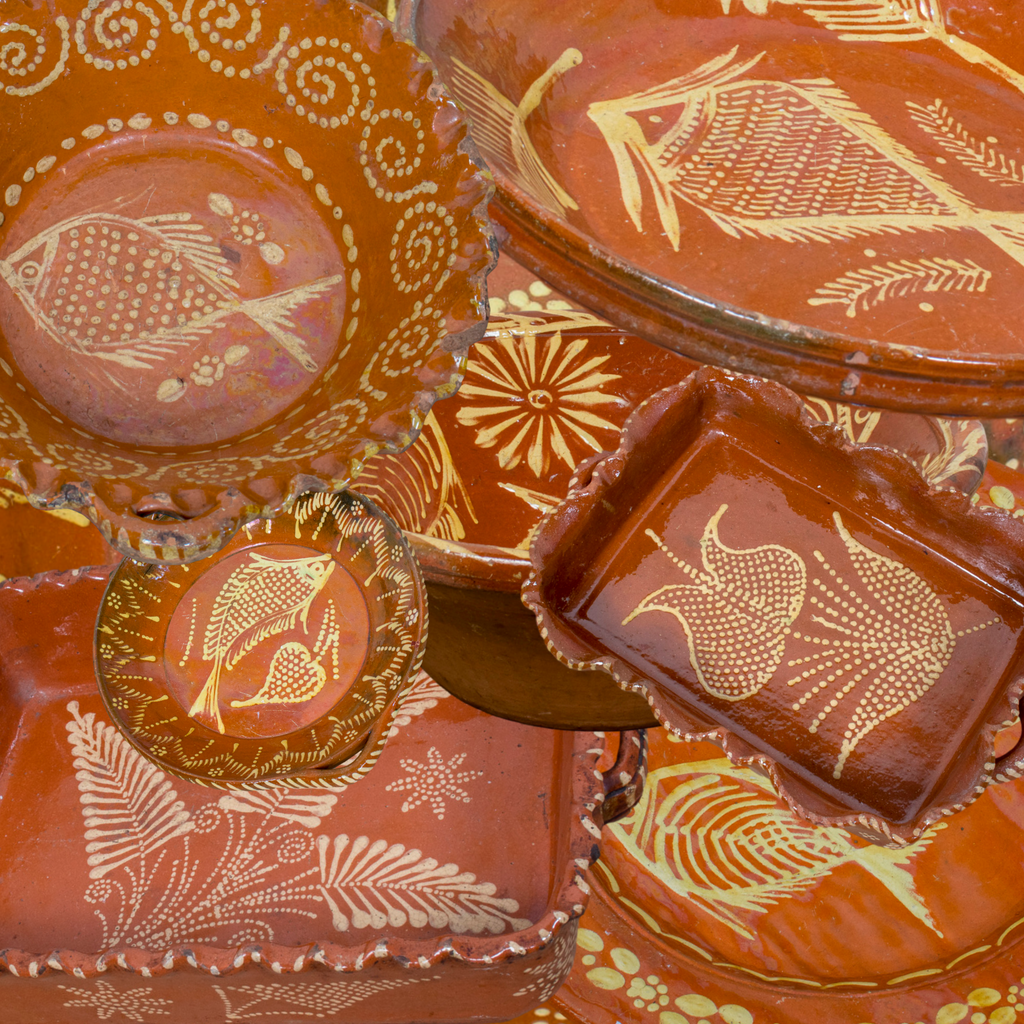
Explore the rustic beauty of 19th century Portuguese red slipware. From fish and fern sgraffito motifs to scalloped baking dishes and shallow bowls, each piece reflects Portugal’s folk pottery tradition — where humble kitchenware becomes timeless art.

Browse the Full Series
See all Double Vision posts →